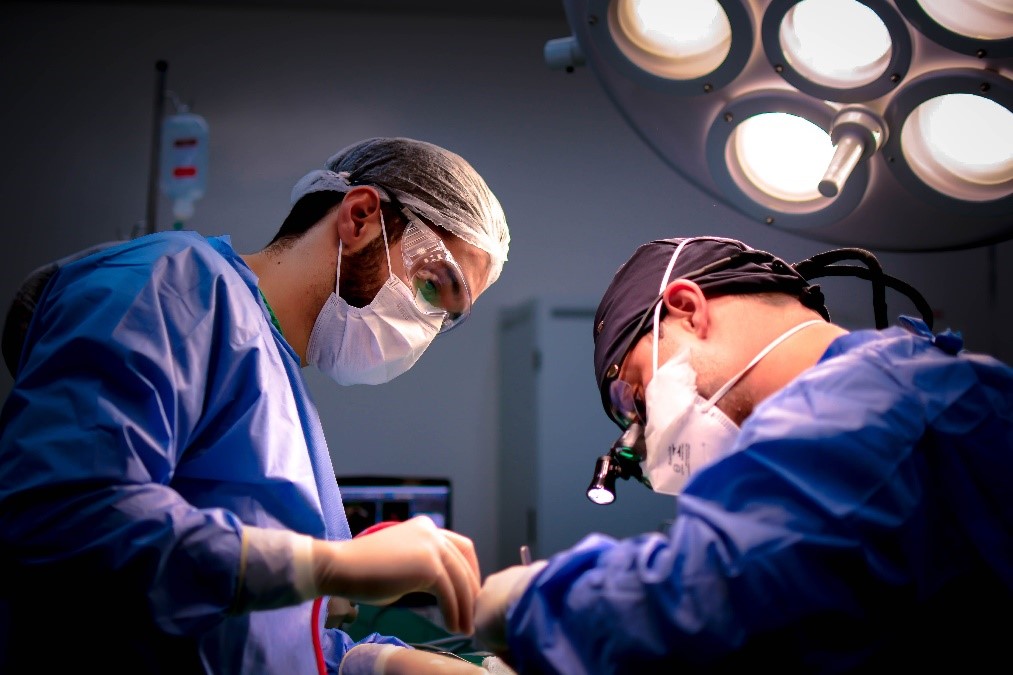
At some point before an operation begins, something unusual happens.
Everyone stops.
The patient has been prepared. The instruments are ready. The anesthesia team is in position. The surgeon may be moments away from making the first incision. Yet instead of continuing, the team pauses.
Is this the correct patient?
Are we performing the correct procedure?
Is this the correct surgical site?
Are there allergies we need to know about?
Is the necessary equipment available?
Does anyone have a concern?
To someone unfamiliar with surgery, these questions might sound obvious. Of course the surgical team knows which patient is on the table. Of course everyone knows which operation is being performed.
History has shown why assumptions like these can be dangerous.
The modern operating room is built around a principle that seems simple but required a major shift in healthcare thinking: good intentions and clinical skill are not enough to guarantee safety. Safe surgery depends on systems designed to catch mistakes before they reach the patient.
How did that idea become such an important part of surgical care?
When Complications Were Seen Differently
Surgery has always involved risk.
Bleeding, infection, anesthesia complications, medication errors, equipment problems, and unexpected changes in a patient’s condition can occur even when care is appropriate. For much of surgical history, poor outcomes were therefore commonly considered an unfortunate reality of operating on the human body.
As medicine advanced, however, an important distinction became clearer.
Some complications could not be prevented.
Others could.
That distinction changed how healthcare professionals began thinking about surgical harm.
If an error could be anticipated, could a system be developed to prevent it? If several people were involved in a mistake, was the problem simply individual carelessness, or had the working environment allowed the mistake to happen?
These questions became increasingly important during the modern patient safety movement.
One landmark was the Institute of Medicine’s report To Err Is Human: Building a Safer Health System, published in 1999 and released as a book in 2000. The report argued that improving safety required healthcare organizations to examine systems and processes instead of treating every error solely as the failure of an individual clinician. It also emphasized learning from mistakes and creating environments where safety was treated as an organizational priority.
Read To Err Is Human from the National Academies
That thinking had enormous implications for surgery.
The Error That Should Never Happen
Consider one of the most disturbing surgical errors imaginable.
A patient enters the hospital for surgery on the left leg.
The right leg is operated on.
Or a patient receives a procedure intended for someone else.
These events are extremely uncommon, but their consequences can be devastating. They also demonstrate something important about safety: highly trained professionals can make catastrophic mistakes when several small failures align.
Perhaps documentation contains an error.
Perhaps communication is incomplete.
Perhaps the surgical schedule changes.
Perhaps the site is not clearly marked.
Perhaps everyone assumes somebody else has checked.
Perhaps nobody feels comfortable questioning what is happening.
Research into wrong-site, wrong-procedure, and wrong-patient surgery has repeatedly identified communication problems, verification failures, and inconsistent adherence to safety processes as contributing factors.
This led healthcare organizations to create deliberate barriers against such errors.
The Joint Commission’s Universal Protocol, implemented in accredited organizations in 2004, established three major safeguards: a pre-procedure verification process, marking the procedure site when appropriate, and a final time-out before the procedure begins.
Explore The Joint Commission’s current Right Patient, Right Care safety standards
The philosophy behind those steps is significant.
Never rely on memory when verification is possible.
Never rely on assumption when confirmation is possible.
And never let the momentum of an operating room become more important than the safety of the patient.
Then Came the Checklist
The idea of using a checklist in surgery may sound almost too simple.
Surgical care involves years of education, sophisticated equipment, highly specialized professionals, and complex clinical judgment. Could a piece of paper with a short series of questions really make a meaningful difference?
That question received international attention through the World Health Organization’s Safe Surgery Saves Lives initiative.
WHO developed a Surgical Safety Checklist intended to improve consistency, communication, and adherence to basic safety practices. The checklist organizes checks around three important stages: before anesthesia, before the skin incision, and before the patient leaves the operating room.
Its questions address issues such as patient identity, surgical site, allergies, anticipated blood loss, antibiotic administration, equipment concerns, specimen labeling, and postoperative plans.
The idea was not that surgical professionals did not know these things mattered.
The problem was that human beings can forget.
People become distracted. Workloads increase. Teams change. Emergencies create pressure. Information is misunderstood. A routine task is skipped because everyone assumes it has already been completed.
A checklist creates a deliberate opportunity to catch those failures.
And the early results attracted attention.
A major study published in The New England Journal of Medicine evaluated the WHO checklist in eight hospitals around the world. Among the patients studied, the rate of death fell from 1.5 percent before implementation to 0.8 percent afterward, while inpatient complications decreased from 11 percent to 7 percent.
Read the surgical safety checklist study on PubMed
Those findings helped establish the checklist as one of the most recognizable tools in modern surgical safety.
The Real Power Is Not the Boxes
There is a danger, however, in misunderstanding what a checklist is supposed to accomplish.
If the team races through the questions merely because policy requires them to do so, the exercise loses much of its value.
The real purpose is conversation.
A properly conducted time-out creates a rare moment when everyone in the operating room is expected to focus on the same patient and the same plan.
The surgeon may identify an unusual step in the procedure.
The anesthesia professional may highlight a specific patient risk.
The nurse may raise a concern about equipment, positioning, sterility, medication, documentation, or another aspect of care.
People who might otherwise be concentrating on different responsibilities briefly form one shared picture of what is about to happen.
Research on surgical checklists has found that their effectiveness is closely connected to teamwork, communication, and the way they are implemented. Simply checking boxes is not the same as creating a culture of safety.
Patient Safety Changed the Hierarchy of the OR
Another major change involved who was permitted to raise a concern.
Operating rooms have historically been hierarchical environments. Surgeons held considerable authority, and junior staff members or nurses could sometimes find it difficult to challenge a decision.
That creates an obvious safety problem.
What happens when the person who notices the danger feels unable to speak?
Modern patient safety culture increasingly emphasizes that any member of the surgical team should be able to raise a legitimate safety concern, regardless of seniority.
For perioperative nurses, this is particularly important.
A nurse may be the person who notices that the consent form does not match the schedule. The nurse may recognize a break in sterile technique, an incorrect implant, a positioning concern, an incomplete count, or a discrepancy in patient information.
Speaking up may delay an operation by several minutes.
Remaining silent could affect the rest of a patient’s life.
Patient advocacy therefore requires more than compassion. At times, it requires the confidence to stop a process that is already moving.
Safety Begins Long Before the Incision
Another lesson from the patient safety movement is that surgical safety cannot begin when the surgeon picks up a scalpel.
The chain of decisions starts much earlier.
- Was the patient correctly identified?
- Was the surgical procedure clearly documented?
- Were allergies recorded?
- Were medications reviewed?
- Was the correct side marked?
- Were relevant test results available?
- Was the equipment prepared?
- Was antibiotic prophylaxis given when indicated?
- Was the patient positioned safely?
- Has the team considered the possibility of significant blood loss?
Safety continues after the operation as well.
Instrument and sponge counts must be reconciled. Specimens must be labeled correctly. Important information must be transferred during handoffs. Postoperative risks must be communicated to the recovery team.
This is why modern surgical safety is better understood as a process rather than a single checkpoint.
A safe operation begins before the patient enters the operating room and continues after the patient leaves it.
Mistakes Became Opportunities to Learn
One of the most important cultural changes in patient safety concerns what happens after something goes wrong.
Traditionally, the immediate question might have been:
Who Made the Mistake?
Modern safety science encourages an additional question:
How Did the System Allow This Mistake to Reach the Patient?
That does not mean individuals have no responsibility. Healthcare professionals remain accountable for their actions.
But blaming one person may fail to reveal why the error occurred.
- Perhaps two medications were packaged almost identically.
- Perhaps an important result was not available at the point of care.
- Perhaps staffing levels contributed to fatigue.
- Perhaps a handoff process was unreliable.
Perhaps a policy existed on paper but was difficult to follow in practice.
Perhaps several warning signs appeared, but nobody had the authority or confidence to stop the process.
The Institute of Medicine argued that healthcare organizations should learn from both harmful events and near misses so that systems can be improved before the same circumstances harm another patient.
That approach remains central to contemporary patient safety.
Technology Helps, but It Does Not Replace Vigilance
Today’s operating rooms contain safety tools earlier surgical teams could scarcely have imagined.
Electronic health records can make patient information easier to access. Barcode systems can support medication and specimen verification. Monitoring systems provide continuous physiological data. Equipment can issue alarms when something falls outside expected parameters.
Yet technology can introduce new risks too.
Information can be entered incorrectly. Alarms can be overlooked. Software can fail. Users can become overly dependent on automation.
The safest operating room is therefore not necessarily the one with the most technology.
It is the one where technology, standardized processes, clinical judgment, communication, and professional responsibility work together.
A Pause with a Purpose
Return to that moment before the incision.
Everyone stops.
The questions are asked.
The patient is confirmed.
The procedure is confirmed.
The surgical site is confirmed.
Concerns are invited.
Then, and only then, does the operation move forward.
That pause may last only a short time, but it represents decades of learning about how harm occurs and how to prevent it.
Modern surgery has become safer because healthcare no longer accepts every mistake as unavoidable. Professionals began studying errors, identifying patterns, strengthening communication, developing standards, and designing systems that make preventable mistakes harder to reach the patient.
For perioperative nurses, patient safety is not one task among many.
It influences every part of the job.
And perhaps the most important lesson of the modern safety movement is also the simplest:
Before proceeding, check.
When uncertain, ask.
When something is wrong, speak.
The patient on the operating table is depending on someone to do exactly that.
References
Institute of Medicine. To Err Is Human: Building a Safer Health System. National Academies Press, 2000.
Read To Err Is Human
World Health Organization. WHO Guidelines for Safe Surgery 2009: Safe Surgery Saves Lives.
View the WHO Guidelines on NCBI Bookshelf
Haynes, A. B., Weiser, T. G., Berry, W. R., et al. “A Surgical Safety Checklist to Reduce Morbidity and Mortality in a Global Population.” The New England Journal of Medicine, 2009.
View the study on PubMed
The Joint Commission. “Right Patient, Right Care.”
View The Joint Commission’s patient safety standards
Agency for Healthcare Research and Quality Patient Safety Network. “Wrong-Site, Wrong-Procedure, and Wrong-Patient Surgery.”
Read the AHRQ Patient Safety Primer
Agency for Healthcare Research and Quality Patient Safety Network. “Checklists.”
Read the AHRQ overview of patient safety checklists