
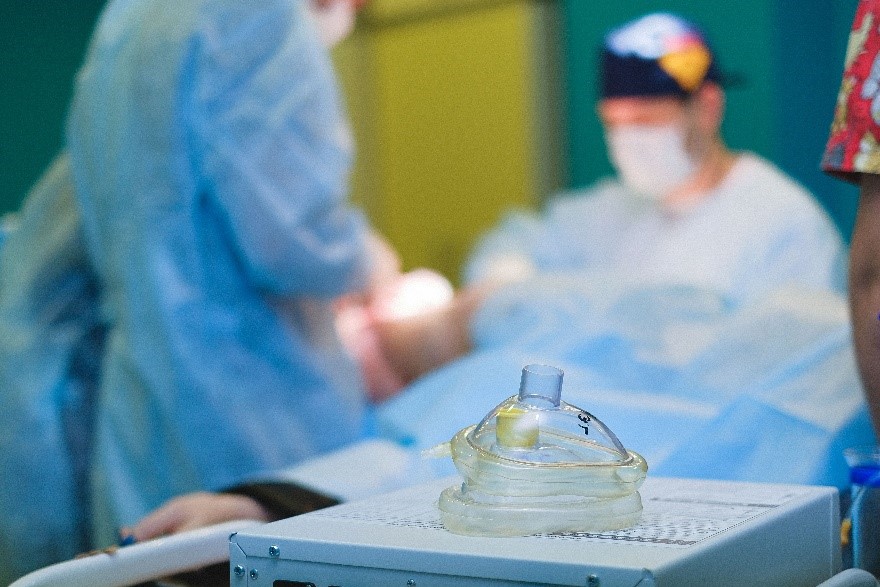
Imagine being told you need surgery, but there is no anesthesia.
No carefully controlled medication to make you unconscious. No local anesthetic to numb the area. No modern monitor tracking your oxygen level, heart rate, or blood pressure. The surgeon may know exactly what needs to be done, but one terrifying question dominates everything: How much pain can you endure, and how quickly can the operation be completed?
For much of human history, that was one of surgery’s defining limitations.
Today, anesthesia is so closely integrated into surgical care that it can seem like simply the step that puts a patient to sleep. Its contribution is far greater. Effective anesthesia changed what surgeons could attempt, how surgical teams worked, how patients experienced an operation, and what conditions medicine could treat surgically.
So, how did controlling pain help change the entire course of surgery?
When Speed Was a Surgical Skill
Before reliable surgical anesthesia, pain placed severe limits on an operation. Substances such as opium and alcohol had been used for centuries in attempts to reduce suffering, but predictable and controllable anesthesia did not yet exist.
A conscious patient could move, struggle, cry out, or experience overwhelming distress. Surgeons therefore had a powerful reason to work quickly. Speed was not simply impressive. It could determine whether a procedure could be completed at all.
That reality also limited the kinds of operations surgeons could reasonably attempt. A lengthy and delicate procedure becomes much more difficult when the patient is fully conscious and experiencing severe pain.
Surgery, therefore, was constrained by more than the surgeon’s knowledge. It was constrained by what the human body and mind could tolerate.
The Day Surgery Changed
One of the great turning points came on October 16, 1846.
At Massachusetts General Hospital in Boston, dentist William T. G. Morton publicly administered ether while surgeon John Collins Warren removed a tumor from the neck of Edward Gilbert Abbott. The event became famous as “Ether Day” and is widely regarded as the first successful public demonstration of ether anesthesia for surgery. The Wood Library-Museum of Anesthesiology describes the demonstration as a landmark in the development of modern anesthesia.
It was not the first time ether had been used to reduce surgical pain. Earlier experiments had taken place, including surgical use of ether in the United States before Morton’s demonstration. What made the Boston event so influential was that it occurred publicly before a medical audience and demonstrated that surgical pain could be controlled effectively.
The news spread rapidly by the standards of the nineteenth century. By December 1846, ether anesthesia was being used in Britain, including during an amputation performed by prominent surgeon Robert Liston.
Something fundamental had changed.
A patient undergoing surgery no longer had to experience every second of the procedure fully awake and in agony.
Pain Was Only One Barrier
Did anesthesia immediately create modern surgery?
Not quite.
Once pain could be controlled, surgeons still faced another enormous problem: infection.
The Royal College of Anesthetists notes that anesthesia initially had a limited effect on the scale of surgery because more extensive operations continued to carry serious risks from infection. As antiseptic and later aseptic practices developed, surgeons could undertake increasingly ambitious procedures with better prospects for survival.
This is an important part of the story because medical progress rarely depends on a single invention.
Modern surgery emerged through advances working together. Anesthesia gave surgical teams more time. Infection control made operations safer. Better instruments, sterile technique, scientific knowledge, nursing practice, monitoring, and technology continued to expand what could be accomplished.
Anesthesia opened a door, but many other developments allowed medicine to walk through it.
From Ether to a Medical Specialty
Early anesthesia looked very different from what patients experience today.
Practitioners did not have modern knowledge of pharmacology, physiology, airway management, controlled ventilation, or sophisticated monitoring. Determining how much anesthetic to give and how the patient was responding required judgment in a field that was still being created.
Gradually, administering anesthesia became recognized as something requiring specialized expertise.
John Snow became one of the pioneers of this emerging field. He studied the effects and administration of ether and chloroform systematically and worked to improve the control of anesthetic delivery. He later became famous for administering chloroform to Queen Victoria during childbirth, an event that helped increase public acceptance of anesthesia.
Over time, new drugs and techniques appeared. General anesthesia was joined by local and regional anesthesia. Intravenous medications became increasingly important. Airway equipment improved. Mechanical ventilation advanced. Monitoring systems became more sophisticated.
Anesthesia was no longer simply about rendering a patient unconscious.
It became a medical discipline concerned with managing pain, consciousness, breathing, circulation, and other vital physiological functions while surgery took place.
What Did Anesthesia Make Possible?
Once anesthesia became safer and more controllable, surgeons gained something extraordinarily valuable: time.
Instead of racing against the patient’s pain, they could perform more careful and complex procedures. Surgery could increasingly involve deeper areas of the body and more delicate anatomical structures.
Today, anesthesia supports procedures involving the brain, heart, lungs, abdomen, joints, blood vessels, transplanted organs, and many other parts of the body. Operations that would have been unimaginable to earlier generations are now routinely performed.
Anesthesia also offers choices.
General anesthesia can produce unconsciousness for major procedures. Local anesthesia can numb a small area while a patient remains awake. Regional techniques can block sensation in a larger part of the body. Sedation may be used when complete unconsciousness is unnecessary.
The modern question is therefore far more sophisticated than, “How do we stop the patient from feeling the operation?”
Clinicians now ask, “Which anesthetic approach is appropriate for this patient, this procedure, and this level of risk?”
Safety Became Part of the Revolution
The development of anesthesia is also a story of learning how to make it safer.
Modern operating rooms contain monitoring systems that early anesthetists could scarcely have imagined. Pulse oximetry helps track oxygen saturation. Electrocardiography monitors the heart’s electrical activity. Blood pressure, ventilation, temperature, and other physiological measurements can be followed throughout an operation.
These are not merely technological conveniences. They provide information that allows clinicians to identify problems quickly and respond.
The World Health Organization places anesthesia safety within its broader approach to safe surgery. The WHO Surgical Safety Checklist requires confirmation before induction that an anesthesia safety check has been completed and that a pulse oximeter is attached to the patient and functioning.
The improvement over time is measurable. A large systematic review involving more than 21 million anesthetic administrations found that mortality attributable solely to anesthesia declined substantially across the decades studied, even as increasingly high-risk patients underwent surgery.
Yet technology alone does not make anesthesia safe. Equipment can provide information. Trained professionals still have to interpret that information, communicate effectively, anticipate complications, and act when something changes.
Where the Perioperative Nurse Fits
For perioperative nurses, anesthesia is part of the patient’s entire surgical journey.
Perioperative nursing encompasses care before, during, and after surgery. According to AORN, perioperative nursing practice incorporates the preoperative, intraoperative, and postoperative phases of the surgical patient’s experience.
That means the perioperative nurse occupies an important position throughout the process.
Before surgery, the nurse helps prepare the patient and confirms that important safety information has been addressed. During surgery, the nurse works within a team responsible for protecting a patient who may be unconscious and unable to communicate discomfort or danger. Afterward, attention turns toward recovery, assessment, comfort, and the identification of potential complications.
The growth of anesthesia and the increasing complexity of surgery have therefore affected nursing as well. As operating rooms became more technologically advanced, perioperative nurses required increasingly specialized knowledge and skills.
The machines changed. The medications changed. The procedures changed.
The responsibility to protect the patient remained.
A Change That Made Other Changes Possible
What would modern surgery look like without anesthesia?
It is difficult even to imagine because anesthesia is now part of the structure that makes modern surgery possible.
Its influence reaches far beyond pain relief. Anesthesia gave surgeons time. It helped make increasingly complex operations possible. It contributed to the development of new medical specialties. It encouraged advances in monitoring, airway management, recovery care, training, teamwork, and patient safety.
Perhaps that is one of the most fascinating things about medical progress. Something revolutionary can eventually become so familiar that we stop noticing how revolutionary it once was.
When a patient enters an operating room today, much of the equipment, knowledge, and safety practice surrounding that person would have been unimaginable to the surgical teams of 1846.
Yet one purpose remains remarkably familiar: allowing necessary surgery to take place while protecting the person who has entrusted the surgical team with their care.
That may be anesthesia’s greatest contribution to the course of surgery.
It did far more than make operations less painful. It helped make an entirely different era of surgery possible.